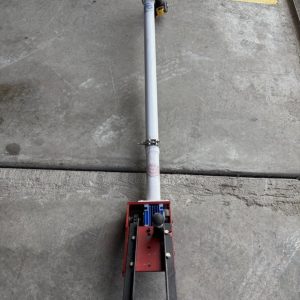
The Aircraft Electric Tow Bar – Mini Max Style offers a space-saving approach to aircraft handling for operators who want powered mobility without purchasing or storing a full-size tug. Using an Aircraft Electric Tow Bar can simplify hangar positioning, reduce manual handling demands, and provide more predictable movement on suitable ground surfaces.
A used Electric Tow Bar for Aircraft can provide strong practical value when its drive system, frame, connections, controls, and included accessories remain in good condition. Before purchasing a Used Electric Aircraft Tow Bar, operators should confirm that the unit functions properly and can attach securely to the intended aircraft.
The compact design of a Mini Max Aircraft Tow Bar makes it a practical option for individual aircraft owners, small maintenance shops, and shared hangar facilities. This package includes an Aircraft Tow Bar with Drill and an Aircraft Tow Bar with Charger, allowing the buyer to receive the primary powered components required for normal operation.
The Portable Aircraft Tow Bar design can support flexible use across private hangars, shared aviation facilities, maintenance shops, and general aviation ramps. The unit can provide the benefits of a Powered Aircraft Tow Bar and Electric Airplane Tow Bar for owners who confirm attachment compatibility and operational suitability.
When evaluating Aircraft Ground Handling Equipment, owners should compare towing capacity, aircraft connection, controls, storage size, portability, and total operating cost. The unit can function as an Aircraft Hangar Tow Bar, Aircraft Moving Equipment, Electric Aircraft Mover, Aircraft Mobility Equipment, or Light Aircraft Tow Bar when verified for the intended application.
Understanding the Aircraft Electric Tow Bar – Mini Max Style
A Mini Max-style electric tow bar can help the operator guide an aircraft into or out of a hangar while maintaining close control over direction and speed. Actual towing ability is influenced by the aircraft, ground surface, gradient, wheel resistance, connection method, operator technique, and mechanical condition of the unit.
A portable powered tow bar can support precise aircraft placement while minimizing the space required for the ground-handling device itself. Operators should still use a wing walker or additional observer when visibility is restricted, clearances are limited, or the aircraft is being moved near other equipment.
Advantages of an Electric Tow Bar for Aircraft
An Electric Tow Bar for Aircraft can reduce the strain associated with moving an airplane manually, particularly when the aircraft must be repositioned frequently or handled by one primary operator. Owners may use the unit when positioning an aircraft for departure, inspection, servicing, photography, washing, or long-term storage.
A tow bar allows the aircraft to be repositioned without operating the engine in confined areas where propeller safety and ventilation are concerns. The operator should follow the aircraft manufacturer’s towing guidance and avoid exceeding steering, nose-wheel, or tow-point limitations.
Choosing a Used Electric Aircraft Tow Bar
The available used unit may be attractive to cost-conscious aircraft owners who want compact powered equipment in excellent operating condition. The operating history provides useful context, while a current demonstration remains the best way to evaluate present function.
Current images should show the complete tow bar from several angles as well as close views of high-load areas and identification markings. When an in-person inspection is not practical, a functional video can help confirm that the powered system operates under realistic conditions.
Mini Max Aircraft Tow Bar Design
A Mini Max Aircraft Tow Bar is generally selected by operators who want powered movement in a compact configuration that does not occupy the floor space of a conventional aircraft tug. The close-control configuration can help users align the aircraft carefully with hangar doors, parking marks, maintenance positions, or storage areas.
Aircraft compatibility depends on the nose-wheel or tail-wheel arrangement, tow attachment, aircraft weight, wheel fairings, ground clearance, and steering limitations. Correct attachment selection is one of the most important factors in achieving reliable, controlled, and damage-free aircraft movement.
Using an Aircraft Tow Bar with Drill
An Aircraft Tow Bar with Drill uses a compatible powered drill to drive the movement mechanism, providing a convenient source of rotational power without a separate built-in propulsion engine. Using the proper drill configuration helps the tow bar move smoothly while limiting unnecessary stress on the drive components and power tool.
Smooth drill input supports controlled starts, predictable stopping, improved traction, and reduced stress on the towing connection. After use, the drill and tow-bar drive should be inspected for heat, wear, looseness, contamination, damage, or abnormal operation.
Aircraft Tow Bar with Charger Storage
The included charger adds practical value because the tow bar depends on reliable battery power for controlled aircraft movement. Buyers should confirm that the charger operates correctly, matches the battery type, has an undamaged cable, and is suitable for the available electrical supply.
The battery should not be left discharged for extended periods because long-term low charge may reduce capacity or shorten service life. Before important aircraft movements, the operator should confirm battery charge rather than discovering insufficient power after the aircraft has been partially Aircraft Ground Handling Equipment repositioned.
Portable Aircraft Tow Bar Storage
A Portable Aircraft Tow Bar offers flexibility for users who operate from more than one hangar, travel between maintenance areas, or need equipment that can be moved easily within an aviation facility. Before transporting the tow bar in a vehicle, it should be secured to prevent movement, impact, contamination, and damage to surrounding cargo.
Organized storage improves readiness because operators can locate the tow bar, drill, charger, adapter, and hardware quickly when movement is required. Shared facilities may benefit from assigning responsibility for charging, inspection, storage, and reporting any equipment concerns.
Powered Aircraft Tow Bar Safety
Powered assistance can improve convenience for owners who operate alone, although aircraft movement should never exceed the operator’s ability to observe and control the situation. The reported Navion application offers a useful reference, but another aircraft may differ significantly in weight, gear design, tire size, or towing geometry.
The user should maintain a clear escape path and avoid standing where the aircraft or tow bar could trap them against a fixed object. A reliable stopping plan should include understanding drill release, reverse control, aircraft braking, chock placement, and the effect of any slope.
Electric Airplane Tow Bar Operation
An Electric Airplane Tow Bar can be useful for general aviation aircraft stored in private hangars, maintenance facilities, shared buildings, and airport storage areas. Aircraft type alone is not enough to confirm fitment because landing-gear design, tow points, wheel pants, tire dimensions, steering limitations, and weight distribution can vary.
The operator should avoid attempting movement when the ground condition exceeds the traction or control capability of the equipment. Training should include normal use, emergency stopping, battery loss, traction loss, attachment inspection, and aircraft securing procedures.
Aircraft Ground Handling Equipment Selection
Private owners should consider whether they need occasional assistance, frequent daily movement, steep-slope capability, outdoor use, or commercial-level durability. Comparisons should include purchase price, accessories, adapters, batteries, chargers, replacement parts, maintenance, storage needs, portability, and operator training.
Ground equipment should be examined regularly because repeated towing loads can loosen fasteners, wear wheels, stress connections, and damage drive components. Preventive maintenance is generally easier and less costly than dealing with equipment failure while an aircraft is partially moved.
Aircraft Hangar Tow Bar Operations
An Aircraft Hangar Tow Bar is most useful when the aircraft must pass through a limited door opening or park close to walls, equipment, or another airplane. The operator should confirm wingtip, tail, propeller, antenna, and control-surface clearances throughout the intended route.
The user should avoid distractions, phone use, conversations, and unnecessary activity while the aircraft is moving. The drill, charger, adapter, and loose hardware should be returned to their assigned storage locations after use.
Choosing Aircraft Moving Equipment
Owners should select Aircraft Moving Equipment according to real operating needs rather than purchasing equipment intended for substantially larger aircraft or commercial fleets. Buyers should consider the heaviest realistic aircraft configuration rather than relying only on empty-weight information.
Only the intended tow connection should receive the towing load, and the operator should avoid improvised methods that can damage the aircraft. Dependable Aircraft Moving Equipment is the result of proper selection, careful use, responsible storage, and consistent inspection.
Electric Aircraft Mover Applications
An Electric Aircraft Mover allows the operator to remain close to the aircraft while controlling direction, speed, attachment, and clearance. The unit’s usefulness depends on compatibility, traction, battery performance, operator ability, towing route, and the condition of the aircraft’s wheels and brakes.
Battery-powered movement avoids exhaust emissions and allows the unit to operate without storing fuel near the aircraft. Recording drill and battery model numbers can simplify future replacement and help the buyer confirm compatibility with spare equipment.
Choosing Aircraft Mobility Equipment
Aircraft Mobility Equipment helps owners control how airplanes are positioned, stored, accessed, maintained, and prepared within aviation facilities. The unit may complement wheel dollies, chocks, jacks, manual tow bars, and other equipment used in a general aviation hangar.
Clear operating information reduces the risk that someone will attach the device incorrectly or attempt to move an unsuitable aircraft. Owners should review equipment needs whenever the aircraft, hangar, ramp surface, storage location, or operating routine changes.
Light Aircraft Tow Bar Applications
A Light Aircraft Tow Bar should be selected for the specific airplane, tow connection, operating weight, wheel arrangement, surface, and hangar layout. Photographs and measurements of the aircraft tow area may help the seller determine whether the existing adapter is suitable.
Light aircraft may still be difficult to move when parked on slopes, stored for long periods, fitted with low tires, or affected by brake resistance. Careful selection and maintenance allow compact towing equipment to remain a dependable part of private aircraft ownership.
Routine Care for Aircraft Ground Equipment
Preventive care helps operators identify minor wear before it becomes a failure that interrupts aircraft movement or risks damage. Inspection frequency should increase when the equipment is used outdoors, shared among several operators, transported regularly, or exposed to moisture and uneven surfaces.
- Review the tow bar for cracks, bending, corrosion, loose bolts, damaged wheels, worn adapters, drive problems, and insecure connections before operation.
- Confirm that the drill operates without slipping, overheating, unusual noise, weak output, damaged housing, or intermittent electrical function.
- Document any operating concern, missing component, damage, repair, or maintenance requirement before returning the equipment to service.
Is the Aircraft Electric Tow Bar – Mini Max Style Right for You?
The Aircraft Electric Tow Bar – Mini Max Style may suit private pilots, maintenance facilities, and hangar operators seeking a compact alternative to a full-size tug. The unit should be judged according to complete operating readiness rather than appearance or purchase price alone.
Whether the requirement is an Aircraft Electric Tow Bar, Electric Tow Bar for Aircraft, Used Electric Aircraft Tow Bar, or Mini Max Aircraft Tow Bar, compatibility and controlled operation should guide the selection. With correct fitment, careful operation, proper battery care, and routine inspection, the tow bar can provide convenient aircraft movement for many future hangar operations.